
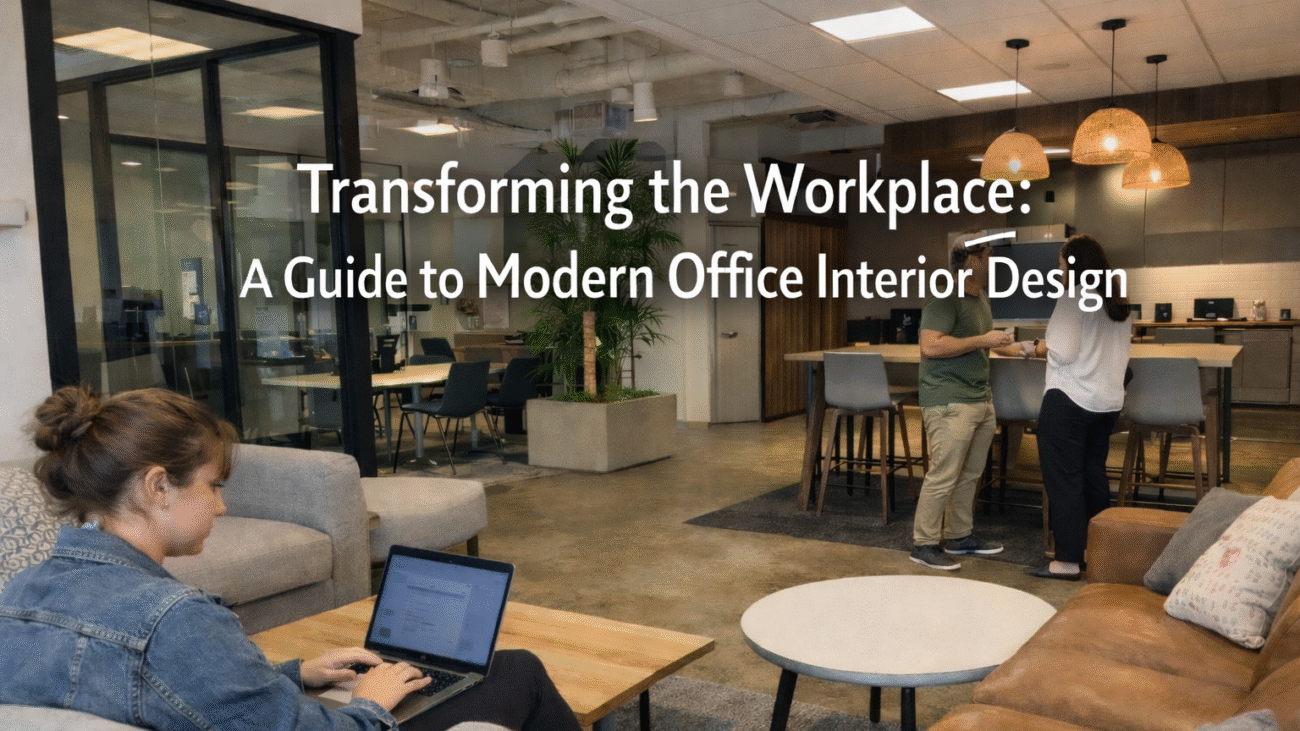
The concept of the workplace has changed more in the last few years than in the previous three decades. In 2026, the office is no longer just a place where people sit at desks for eight hours a day. It has evolved into a strategic tool for growth a hub for creativity, a sanctuary for focus, and a physical representation of a company’s soul. When you walk into a workspace today, the environment immediately tells a story about the culture within.
At QuickFurnish, we have seen firsthand how a thoughtful layout can transform a stagnant office into a high-energy environment. It is about more than just picking the right paint colors or trendy furniture; it is about understanding how people move, interact, and feel within a space. This is where professional corporate interior design becomes a powerful investment in your brand’s future.
The shift toward human-centric workspaces
The modern employee expects more from their office than a cubicle and a coffee machine. We are seeing a massive trend toward “human-centric” design, which prioritizes physical comfort and mental well-being. This shift isn’t just about aesthetics; it is backed by science. When an environment supports the natural rhythms of the human body, stress levels drop and cognitive clarity improves.
In the realm of office interior design, this translates to ergonomic workstations, plenty of natural light, and quiet zones for deep work. Imagine an office where the lighting adjusts its warmth throughout the day to match your circadian rhythm, or where acoustic panels are woven into the decor to prevent “open-office noise” from breaking your concentration. These aren’t just luxuries; they are the building blocks of a high-performance culture.
Balancing collaboration and privacy
One of the biggest challenges in corporate interior design is finding the “sweet spot” between open collaboration and individual privacy. While open-plan offices were meant to foster teamwork, they often resulted in distractions. The solution in 2026 is “activity-based working.”
Instead of assigning a single desk to every person, a smart office interior design provides a variety of settings. You might have large communal tables for brainstorming, semi-private booths for video calls, and completely silent “library” zones for tasks that require intense focus. By giving employees a choice of where and how they work, you empower them to be at their most productive.
Biophilic design: Bringing the outside in
We have all felt the mid-afternoon slump that comes from being trapped in a windowless room. The solution that the best designers are leaning into is biophilic design. This involves integrating natural elements—like living green walls, indoor water features, and the use of raw materials like stone and wood—into the office.
Greenery does more than just look pretty. Plants act as natural air purifiers and sound buffers, creating a calmer atmosphere. At QuickFurnish, we often suggest vertical gardens or strategically placed potted plants to act as “soft boundaries” between departments. It’s a simple way to make a corporate space feel grounded, human, and alive.
Branding through physical space
Your office is often the first impression a client or a potential new hire has of your business. Does your space scream “innovation and agility,” or does it whisper “stability and tradition”? Every choice, from the texture of the carpets to the height of the ceilings, contributes to your brand’s narrative.
Effective corporate interior design uses the physical environment to communicate values. For a tech startup, this might mean industrial finishes and modular furniture that can be reconfigured overnight. For a prestigious law firm, it might mean rich wood accents and a sense of permanence. Your office should be your best salesperson, reflecting your identity the moment someone walks through the door.
The role of technology integration
In a world where hybrid work is the standard, the office must be tech-seamless. There is nothing more frustrating than a meeting room where the “dongle” doesn’t work or where there aren’t enough charging ports. Modern office interior design integrates technology into the very fabric of the furniture.
Wireless charging built into cafe tables, smart glass that turns opaque at the touch of a button for privacy, and high-quality AV setups that make remote team members feel like they are in the room—these are the new essentials. A tech-forward design ensures that the office remains a frictionless place to get things done.
Sustainability as a core value
In 2026, sustainability is a business imperative. Clients and employees alike want to know that the companies they work with are environmentally responsible. Smart corporate interior design now focuses on “circular” thinking—using recycled materials, energy-efficient lighting, and modular furniture that can be repaired or repurposed rather than replaced.
At QuickFurnish, we prioritize turnkey solutions that emphasize longevity. A sustainable office isn’t just better for the planet; it’s better for your bottom line, as energy-efficient systems significantly lower long-term operational costs.
Your office as an investment in the future
Ultimately, your workspace is an investment in your most valuable asset: your people. It is the place where your biggest ideas will be born and your toughest challenges will be solved. Shouldn’t that space be inspiring?
If you are ready to move beyond basic cubicles and create a workspace that actually works for you, it is time to look at professional office interior design. At QuickFurnish, we are passionate about helping businesses in Ahmedabad and beyond reach their full potential through better design.