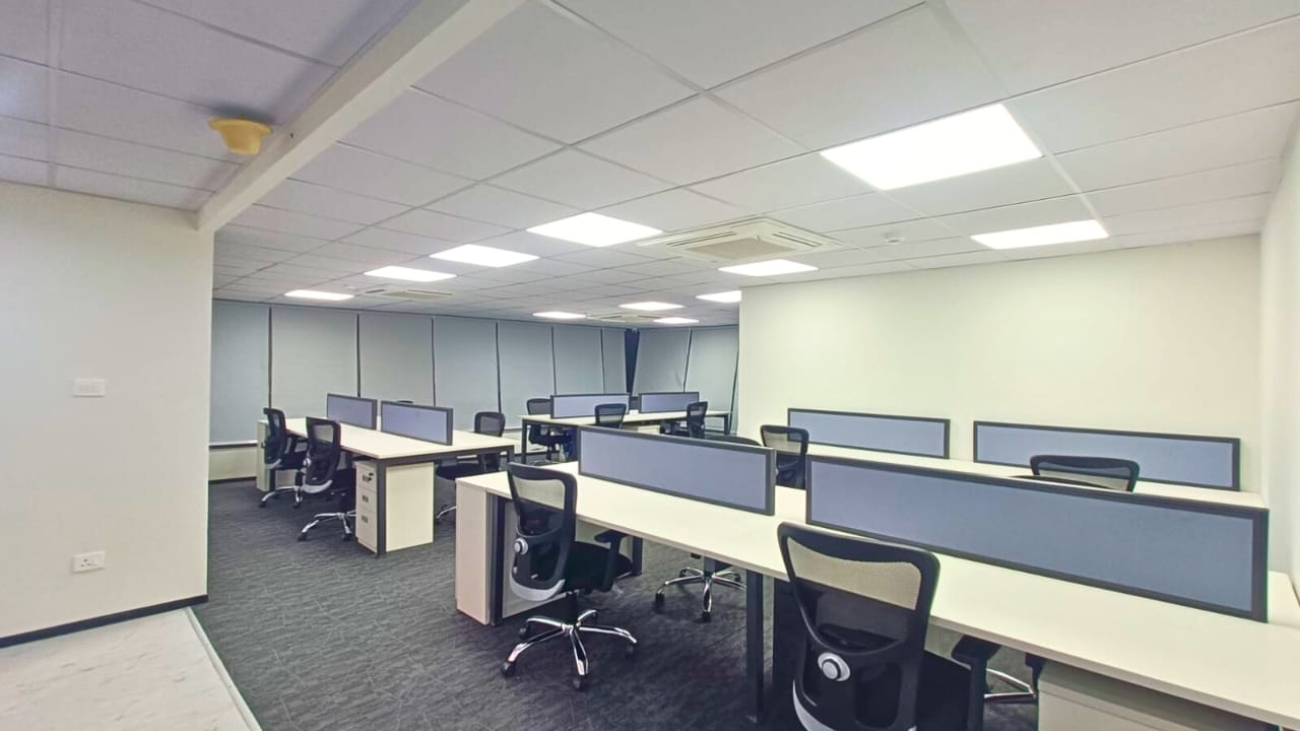
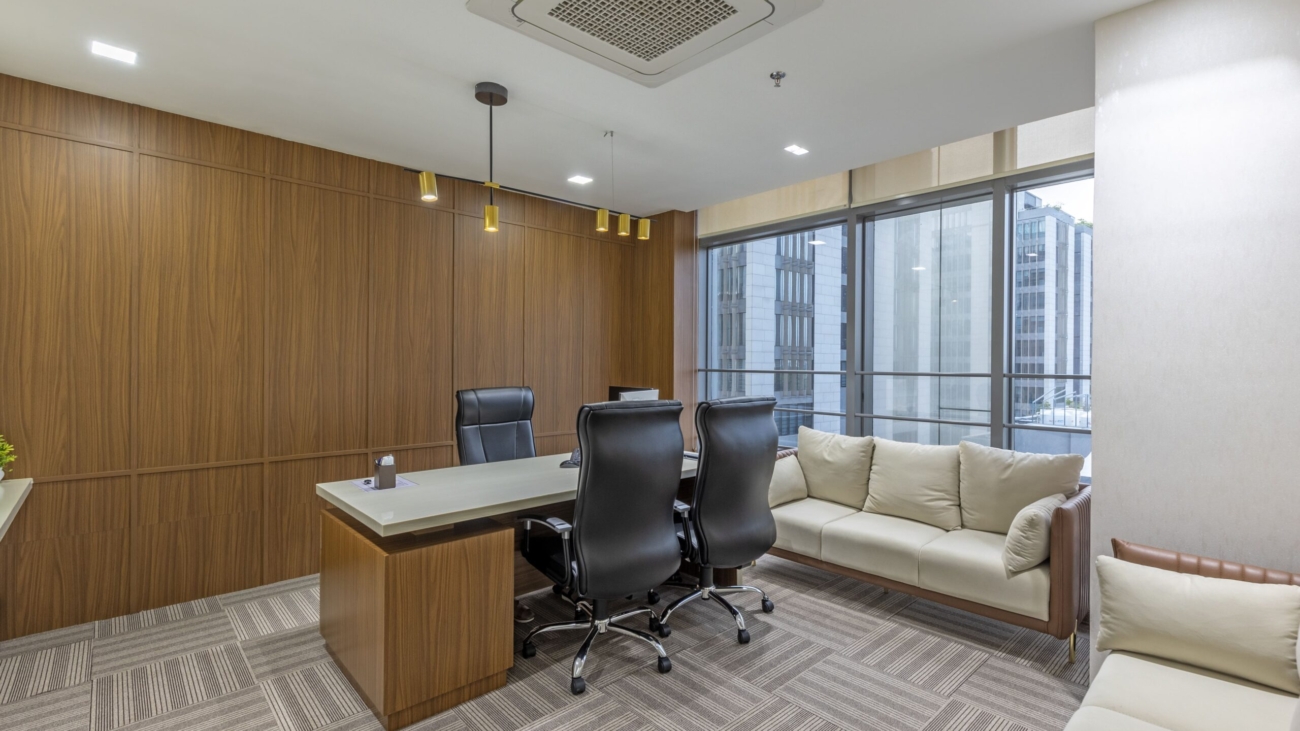
Interior Design Firms Nagpur

Future of Office Space Design: Success in Your Interior Design Project

The modern workplace has officially moved past the “transitional” phase of the early 2020s. As we move through 2026, the office has evolved into a high-performance destination rather than a mandatory location. It is no longer just about desks and chairs; it is about creating an environment that people choose to visit because it offers a better experience than their home setup.

At QuickFurnish, we have seen firsthand how a strategic office space design can fundamentally shift a company’s culture and bottom line. Whether you are a growing tech firm in Ahmedabad or a global corporation, starting a new interior design project today requires a blend of sensory psychology, modular technology, and sustainable ethics.

Let’s explore the trends, technicalities, and human elements defining the workspaces of 2026.

The 2026 Workspace Philosophy: “The Destination Office”

In 2026, the primary goal of any office space design is to facilitate what we call “Meaningful Magnetism.” This means the office acts as a magnet for collaboration and innovation. Research shows that professionals now prioritize sensory variety and personal control over their environment (ADT Workplace, 2026).

Key Elements of the 2026 Framework

  • Sensory-Zoned Layouts: Gone are the days of a single open-plan floor. Modern offices use acoustic management and lighting temperature to create “neighborhoods” designed for specific cognitive tasks—quiet zones for deep focus and high-energy hubs for brainstorming.
  • Tactile Authenticity: We are seeing a move away from sleek, sterile surfaces toward textured materials like ribbed glass, timber slats, and boucle fabrics. These elements provide a “human touch” that balances out our increasingly digital work lives.
  • Phygital Equity: Every meeting room is now designed for “eye-to-eye” digital interaction, ensuring that remote participants feel as physically present as those in the room.

Mastering Your Next Interior Design Project

A successful interior design project in 2026 is no longer a linear process of “plan, buy, install.” It is a dynamic lifecycle that begins with deep data analysis of how your team actually uses space.

1. Data-Driven Space Planning

Before a single brick is laid, we use occupancy sensors and employee feedback to map out the “traffic flow” of your office. This ensures that your high-traffic social zones aren’t accidentally placed right next to quiet zones where people are trying to code or write.

2. The Modular Mandate

Static walls are a relic of the past. For your 2026 interior design project, flexibility is the ultimate luxury. We utilize movable partitions and modular furniture that allow a single room to transform from a training hall in the morning to a social lounge by the afternoon.

3. Sustainability as a Standard

Sustainability is no longer a “nice-to-have” feature. From reclaimed wood to energy-efficient smart lighting that adjusts based on natural sunlight levels, every material choice in your project should contribute to a lower carbon footprint and a healthier indoor environment.

Trending Insights: What’s “In” for 2026

If you are planning an office space design this year, keep these trending concepts in your mood board:

  • Neuro-Inclusivity: Designing for diverse minds. This includes providing low-sensory “recharge rooms” for introverts or those with sensory processing needs.
  • Hospitality-Led Reception: The entrance to your office should feel more like a boutique hotel lounge than a corporate gate. It’s about warmth, comfort, and an immediate sense of belonging.
  • Biophilic Architecture: We are moving beyond potted plants. 2026 is about “structural greenery,” where living walls are integrated into the HVAC system to naturally purify the air.

Why QuickFurnish is the Partner for Your Vision

When you embark on a complex interior design project, you need more than a vendor; you need a partner who understands the local landscape of Ahmedabad while maintaining international standards. QuickFurnish specializes in turning empty shells into vibrant ecosystems.

  • Speed to Market: We understand that downtime is lost revenue. Our turnkey solutions are designed to deliver high-quality office environments in record time, often completing major fit-outs in under 60 days.
  • Customized Excellence: We don’t do “copy-paste” designs. Every office space design we produce is tailored to the specific brand identity and workflow requirements of our clients.
  • End-to-End Management: From 3D visualization and site analysis to procurement and final handover, we handle the heavy lifting so you can focus on growing your business.

Future-Proofing Your ROI

A well-executed interior design project is a high-yield investment. Statistics from early 2026 suggest that companies with optimized, human-centric offices see a 25% increase in employee retention and a significant boost in collaborative output.

By investing in quality office space design, you are not just buying furniture; you are building an infrastructure for talent.

Frequently Asked Questions (FAQs)

Q: How has office space design changed since the hybrid work boom?

A: It has become more activity-based. Instead of one desk per person, offices now offer a variety of “touchdown points” tailored to specific tasks like calls, creative sessions, or focused work.

Q: What is the average timeline for an interior design project in 2026?

A: While it depends on the scale, a standard corporate office renovation typically takes between 6 to 10 weeks at QuickFurnish, thanks to our integrated project management tools.

Q: Is biophilic design just about plants?

A: No. It involves natural lighting, organic shapes, natural materials, and even “soundscapes” that mimic nature to reduce stress and improve cognitive function.

Q: How can I ensure my office stays relevant for the next 5 years?

A: Focus on agility. Use modular furniture and ensure your technical infrastructure (power and data) can be easily reconfigured as your team evolves.

Ready to Transform Your Workspace?

The future of work is already here, and your office should reflect that. Don’t let your workspace be a relic of the 2010s. Whether you are starting a fresh interior design project or looking to modernize your current office space design, our team is here to guide you.

Contact QuickFurnish today. Let’s build a workspace that inspires your team, impresses your clients, and drives your business forward into 2026 and beyond.

16

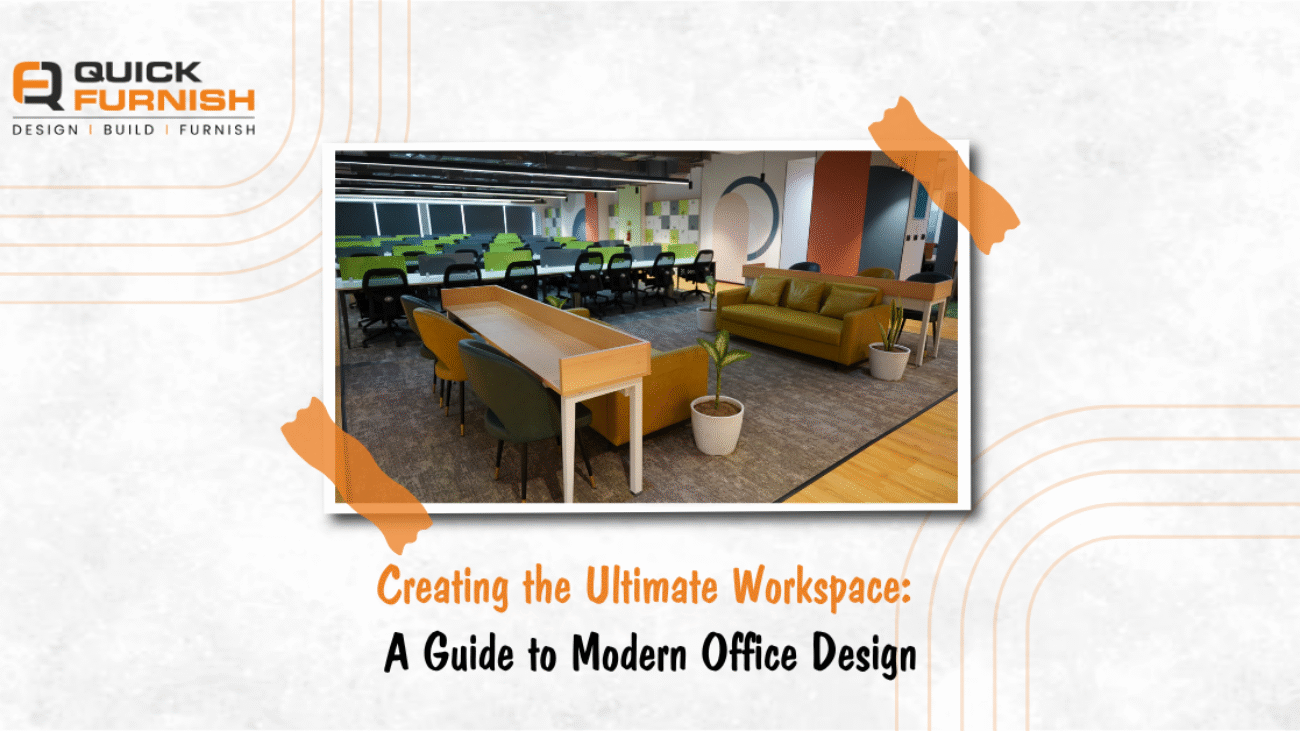
Creating the Ultimate Workspace: A Guide to Modern Office Design

When you walk into a workspace, you can feel the energy or the lack of it almost immediately. Some offices feel like a playground of ideas, while others feel like a relic of the 1990s. In today’s fast-paced business world, your physical environment is no longer just a place to park your laptop; it is a tool for growth. If your team is struggling with focus or your company culture feels a bit stagnant, the solution might not be a new HR policy. It might be your walls.

At Quickfurnish, we’ve spent years watching how people interact with their surroundings. We’ve learned that a great office isn’t just about the most expensive chair or the flashiest lobby. It’s about balance balancing aesthetics with utility, and privacy with collaboration.

Why Strategic Office Design Matters More Than Ever

In the current era of hybrid work, the office has to work harder than it used to. It has to give people a reason to leave their comfortable home setups. This is where modern office space design comes into play. It is the art of creating an environment that supports different “modes” of work throughout the day.

Think about your average Tuesday. You might start with a high-energy team huddle, move into three hours of deep, silent coding or writing, and end the day with a casual one-on-one. A one-size-fits-all desk layout can’t support all those activities effectively. By incorporating “zones” quiet corners, lounge areas, and tech-enabled meeting rooms—you allow your employees to choose the environment that fits their task. This autonomy is a huge driver of job satisfaction.

The Beauty of Turnkey Project Management

The biggest hurdle most business owners face when considering a renovation is the sheer headache of it all. You have to talk to the electrician, chase the carpenter, argue with the flooring guy, and hope the furniture arrives on the same day the paint dries. It’s enough to make anyone stick with their old, peeling desks for another five years.

This is exactly why we champion turnkey project management. Essentially, you hand over the keys and the vision, and we handle the chaos. Having a single point of accountability means that the person who designed the 3D model is the same person overseeing the installation.

Imagine not having to coordinate between five different vendors. Instead, you get a streamlined timeline where every phase from demolition to the final polish on the conference table is choreographed perfectly. It saves time, reduces stress, and almost always prevents the costly “oops” moments that happen when different contractors aren’t communicating.

Lighting and Ergonomics: The Silent Productivity Boosters

We often get asked about the “secret sauce” of a great office. While there isn’t one single trick, lighting is usually at the top of the list. Harsh, blue-toned overhead lights are the fastest way to give your staff a headache. We always aim to maximize natural light wherever possible.

If your floor plan doesn’t allow for windows in every corner, we use “smart lighting” that mimics the movement of the sun. This keeps the body’s internal clock on track and prevents that 3:00 PM energy crash.

Then there is the furniture. Ergonomics is a word that gets thrown around a lot, but it’s vital. An uncomfortable chair isn’t just a nuisance; it’s a long-term health risk. When we select pieces for a project, we look for adjustable features that accommodate different body types. Happy backs lead to happy brains.

Designing for Your Brand’s Unique Voice

Every business has a personality. A law firm in a heritage building shouldn’t look like a tech startup in a glass tower. Your office should act as a three-dimensional business card. When a client walks in, the colors, textures, and even the “scent” of the office should tell them who you are.

We love incorporating local elements into our designs. Whether it’s a specific texture on a feature wall or a layout that honors the local culture of collaboration, these details make the space feel authentic. It’s not just about following a Pinterest trend; it’s about building a home for your brand’s mission.

Maximizing Small Spaces Without Feeling Crowded

Not every company has a 10,000-square-foot floor plate to work with. In fact, some of our most creative work happens in compact offices. The trick is to use vertical space and multi-purpose furniture.

Think of a storage unit that doubles as a room divider, or a breakroom table that is equipped with power outlets so it can serve as an overflow workspace during peak hours. By being intentional with the footprint, we can make a small office feel expansive and airy.

Your Partner in Transformation

At the end of the day, an office is about the people inside it. At Quickfurnish, our goal is to take the heavy lifting off your shoulders so you can focus on what you do best: running your business. We believe that professional design should be accessible, efficient, and tailored to your specific needs.

If you’re ready to stop settling for a “fine” office and start building an “exceptional” one, we’re here to help. From initial concepts to the final walkthrough, let’s create a space that inspires your team every single morning.

Connect with Quickfurnish:

  • Email: info@quickfurnish.co
  • Phone: +91 70437 04333
5

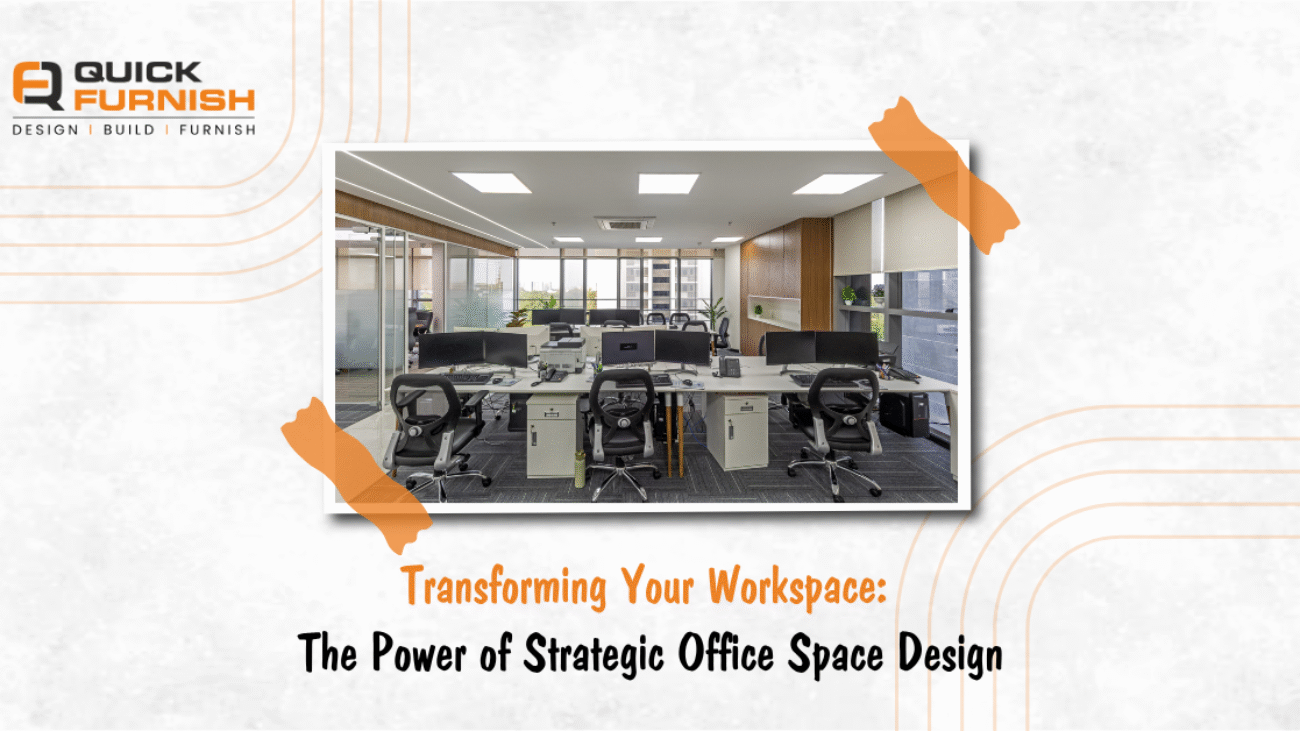
Transforming Your Workspace: The Power of Strategic Office Space Design

In the modern business landscape, the physical environment of an office is no longer just a place where employees sit to complete tasks. It has evolved into a strategic asset—a tool that can drive innovation, reflect brand identity, and significantly impact employee well-being. As companies navigate the complexities of hybrid work and changing workforce expectations, the importance of thoughtful office space design has never been more apparent.

However, realizing a vision for a perfect workspace is often easier said than done. From the initial conceptualization to the final installation of the last desk lamp, the process is riddled with logistical challenges, vendor management, and budgetary risks. This is where the efficiency of a turnkey project model becomes a game-changer for growing businesses.

The Impact of Design on Productivity

The psychology of a workspace is profound. A well-designed office does more than just look good; it functions as an ecosystem. When we talk about high-level design, we are discussing the integration of ergonomics, lighting, acoustics, and spatial flow.

For instance, open-plan layouts can foster collaboration but often fail when they don’t provide “quiet zones” for deep focus. Conversely, a rigid, cubicle-heavy environment might stifle the spontaneous idea-sharing necessary for creative industries. Strategic design balances these needs, ensuring that the physical layout supports the diverse tasks employees perform throughout the day.

Why Choose a Turnkey Project for Your Office?

For many business owners and facility managers, the prospect of an office renovation is daunting. Dealing with architects, contractors, furniture suppliers, and IT specialists separately can lead to miscommunication and costly delays.

A turnkey project simplifies this entire lifecycle. By partnering with a single provider like Quickfurnish, you transition the burden of management to experts. In this model, the provider takes full responsibility for the project from the “turn of the key” at the start to the moment you walk into a finished, ready-to-use space.

The benefits of this approach include:

  • Single Point of Contact: You don’t have to play middleman between five different vendors.
  • Budget Certainty: Because the project is managed under one roof, cost overruns are significantly minimized.
  • Time Efficiency: Simultaneous scheduling of design and procurement phases often leads to faster completion dates.
  • Cohesive Aesthetic: When the design and execution teams work in tandem, the final result is a perfect reflection of the original vision.

Blending Aesthetics with Functionality

At Quickfurnish, we believe that an office should tell a story. Whether you are a tech startup looking for a high-energy, industrial vibe or a law firm requiring an atmosphere of tradition and trust, the design must be intentional.

Modern trends are leaning heavily toward “resimercial” design—a blend of residential comfort and commercial durability. This includes incorporating natural elements (biophilic design), flexible furniture that can be easily rearranged, and dedicated “breakout” areas that encourage social interaction. By focusing on these elements, businesses can create an environment where employees actually want to be, rather than one they feel obligated to attend.

Future-Proofing Your Office

The only constant in business is change. A static office design can quickly become obsolete as your team grows or your operational needs shift. Modular furniture and adaptable layouts are essential components of a forward-thinking workspace.

When planning your project, consider the “what ifs.” What if we double our headcount? What if we move to a 100% paperless system? A professional design approach anticipates these shifts, ensuring that your investment today continues to provide value five or ten years down the line.

Frequently Asked Questions

What exactly is included in a turnkey office solution? 

A turnkey solution covers every phase of the workspace creation. This includes space planning, interior design, civil work, electrical and data cabling, plumbing, furniture procurement, and final installation. Essentially, the client provides the requirements, and the provider delivers a move-in-ready office.

How does professional design improve employee retention? 

Employees today value their work environment as part of their total compensation package. A space that prioritizes comfort, provides high-quality ergonomic tools, and offers diverse areas for different work styles shows that a company values its staff. This leads to higher job satisfaction and lower turnover rates.

How long does a typical office renovation take? 

The timeline varies depending on the square footage and the complexity of the requirements. However, using a turnkey approach usually reduces the timeline by 20% to 30% compared to traditional methods, as the design and construction phases are integrated.

Is it more expensive to hire a turnkey provider? 

While the upfront quote might seem higher than hiring individual contractors, it is often more cost-effective in the long run. The integrated management prevents expensive errors, reduces the hours your internal team spends on oversight, and leverages the provider’s relationships with manufacturers for better pricing on materials and furniture.

Conclusion

The journey toward a better workspace doesn’t have to be a stressful endeavor. By focusing on purposeful design and leveraging the streamlined efficiency of a comprehensive project model, you can create an office that inspires your team and impresses your clients.

At Quickfurnish, we specialize in bringing these visions to life with precision and style. We take the complexity out of the process so you can stay focused on what matters most: growing your business.